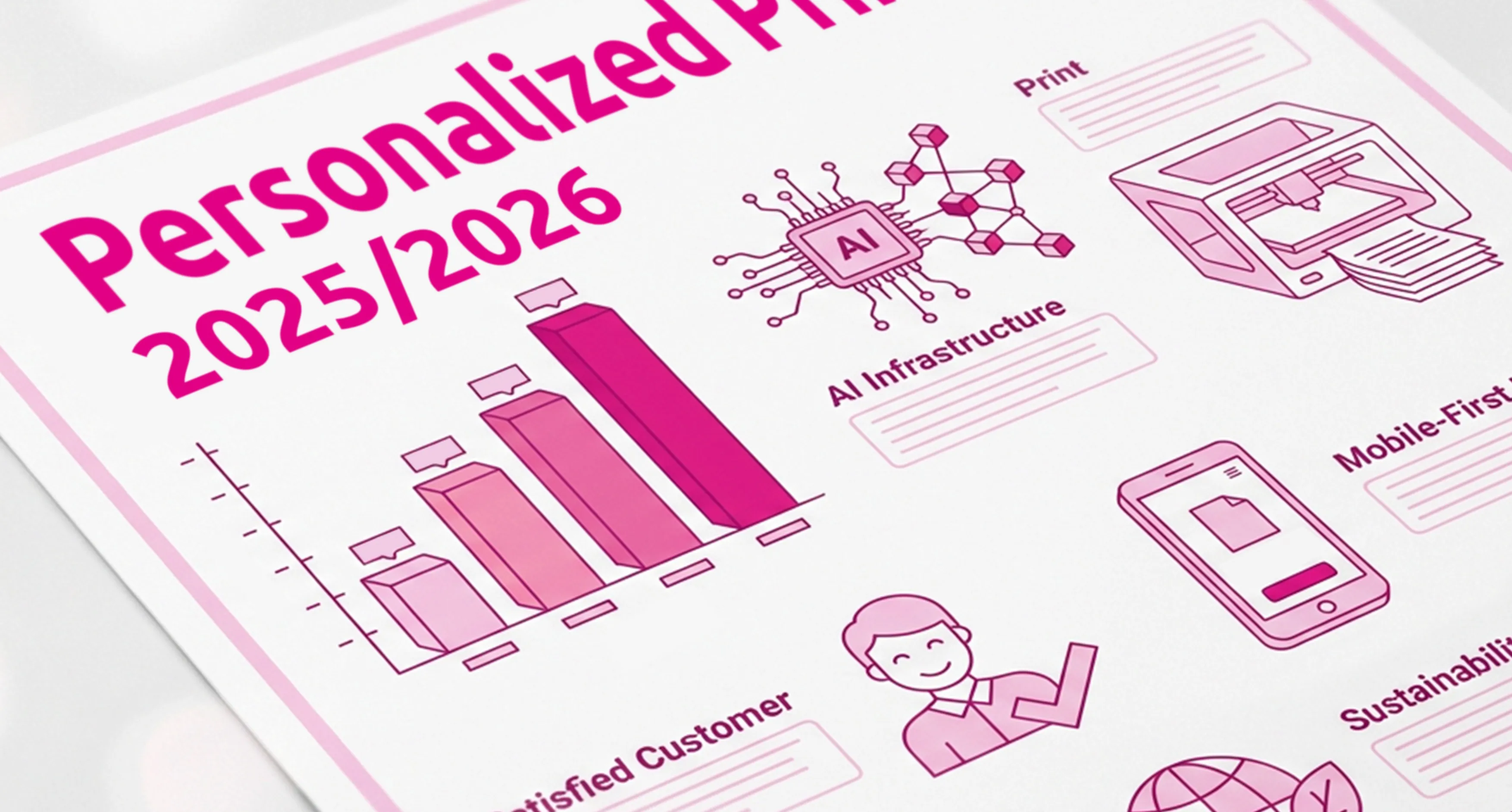
The state of personalization 2025/26
Tessa du Plooy
Seven things every print business, E-commerce team, and brand manager should know about where the market stands, and where it’s heading.
Personalized print is one of the fastest-growing segments in E-commerce, and the gap between businesses that have nailed the personalization experience and those that haven’t is widening fast. Below are the seven most important findings from our analysis of the market. The full report, which includes primary survey data from print shop operators and E-commerce teams, is in progress. If you’d like to contribute your data and get early access, please let us know in the link below.
1. The market is worth $27–35 billion, and growing steadily
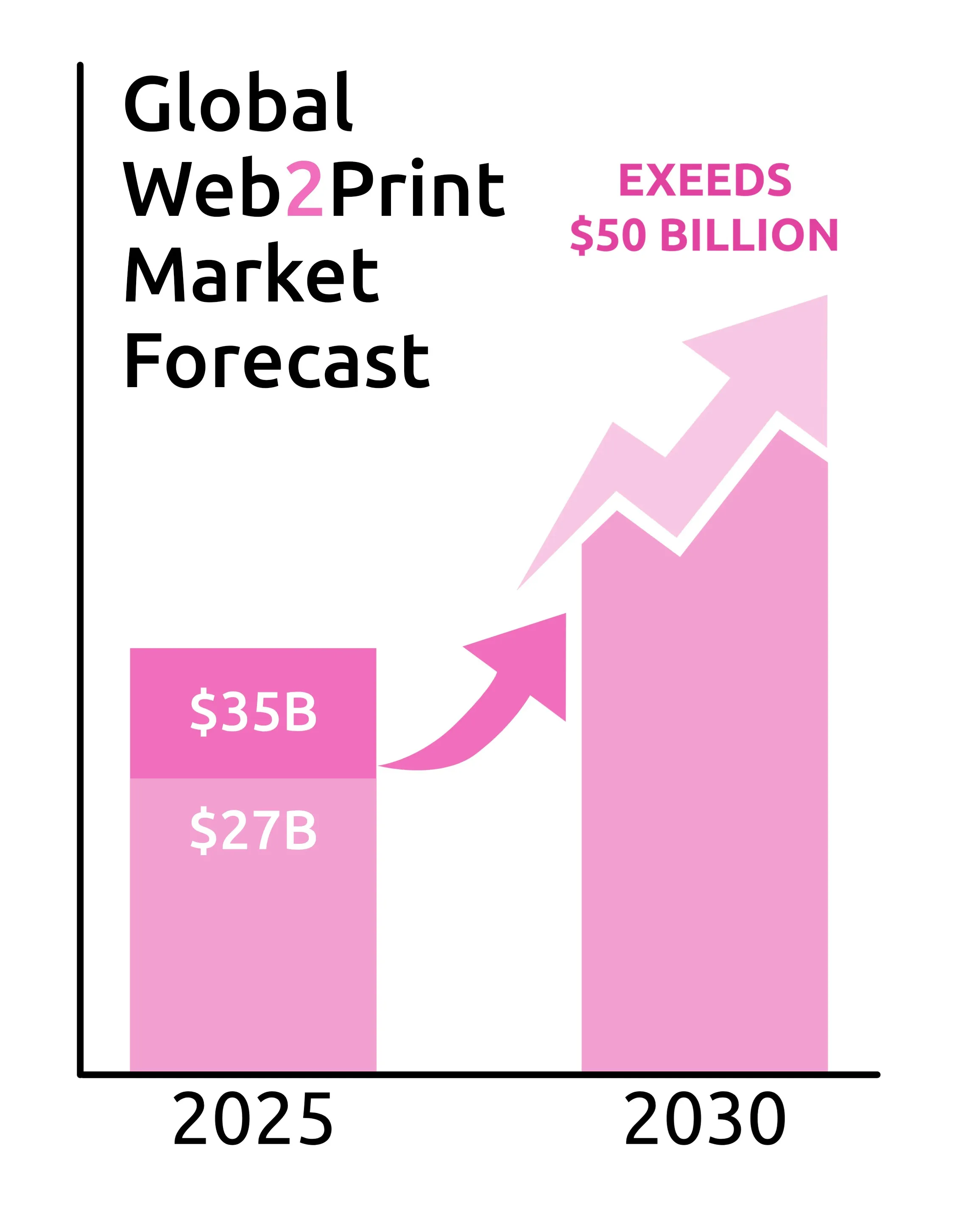
The global web-to-print market sits at between $26.59 billion and $34.78 billion (in 2025), depending on how you define it. The spread reflects different methodologies; some reports cover software only while others cover the full-service ecosystem. The direction is consistent across every source: structural, sustained growth at 5–7% annually. The market is forecast to exceed $50 billion by 2030. Drivers include the acceleration of E-commerce, AI-assisted design tools going mainstream, growing demand for short-run on-demand printing, and the expansion of distributed manufacturing.
 Source: Mordor Intelligence, IMARC Group, Research & Markets (2025)
2. Print-on-demand is the rocket ship inside the market
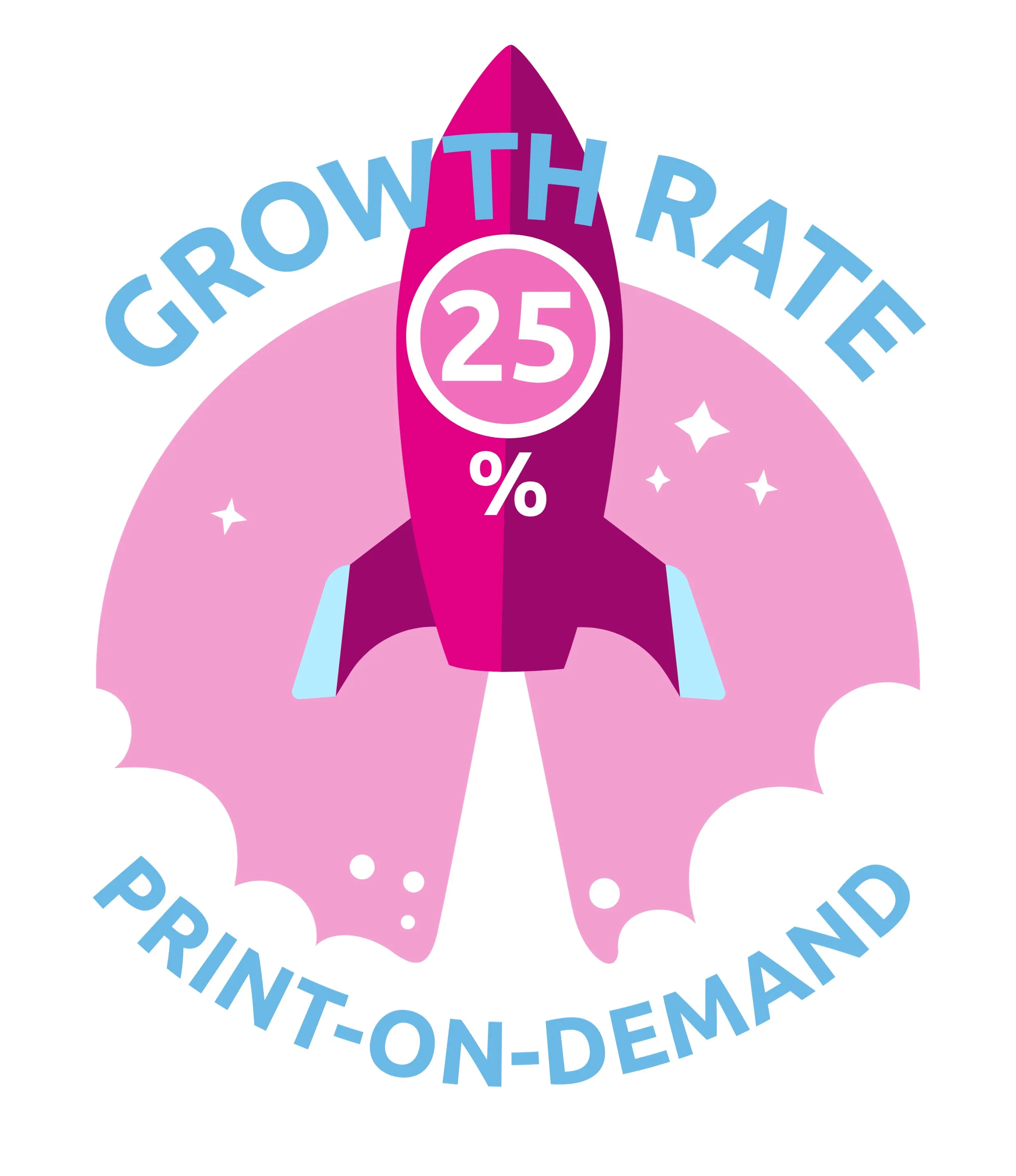
Within web-to-print, print-on-demand (POD) is the standout growth story. The POD market was valued at $12.15 billion in 2025 and is forecast to reach $37.85 billion by 2030. That’s a 25.52% compound annual growth rate. To put that in context: it will roughly triple in five years.
The model is simple and compelling. Merchants list thousands of personalized SKUs with zero inventory risk; customers receive products that feel genuinely made for them. More than 228,000 active stores now use POD fulfilment. Apparel leads, but wall art, home décor, and drinkware are growing fast. The wall art sector alone is expected to double by 2030.
 Source: Mordor Intelligence (2026)
3. Consumer expectations have fundamentally shifted
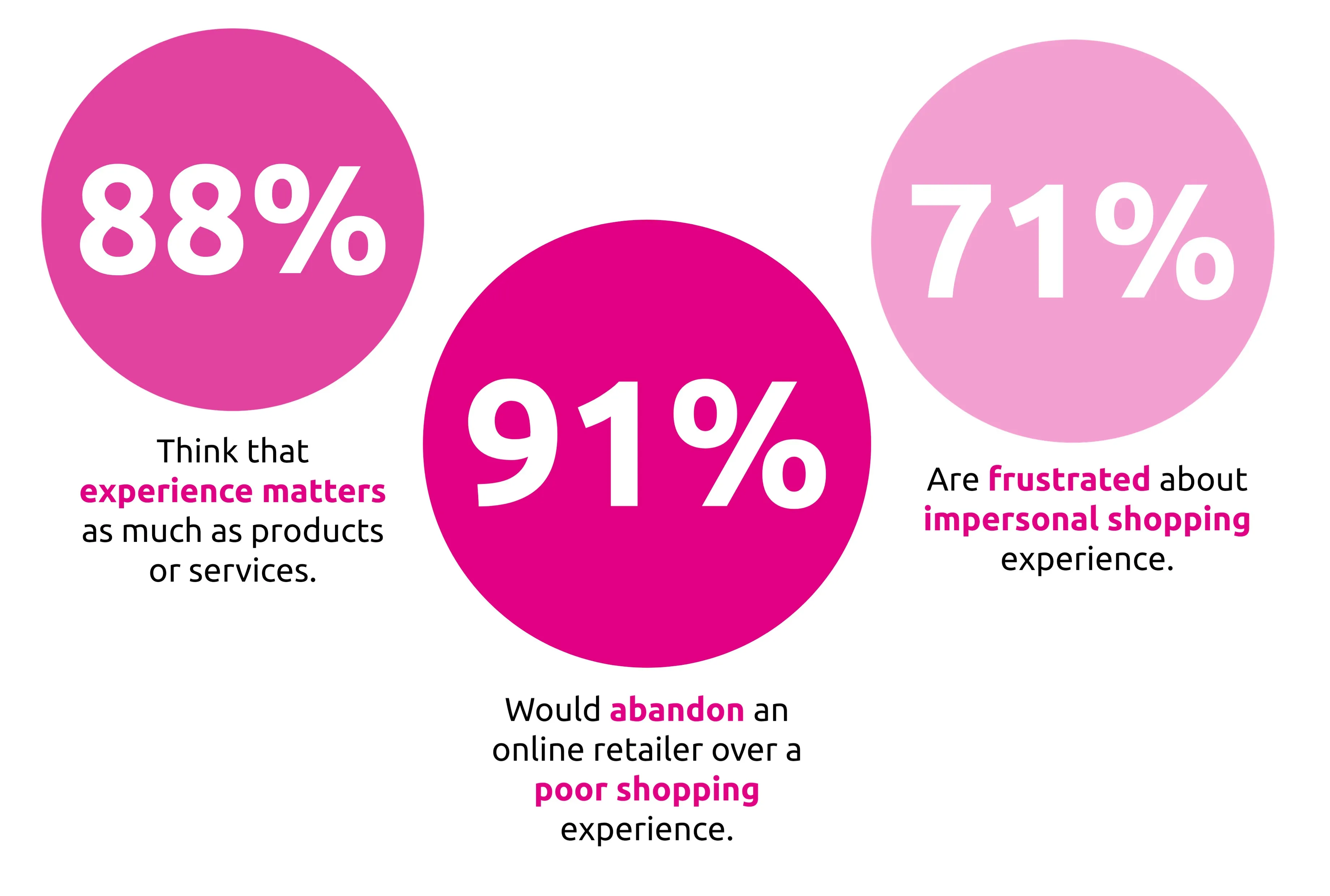
The most important shift in the market isn’t technical it’s attitudinal. Consumers no longer see personalized experiences as a premium feature. They see the absence of them as a failure. 88% of consumers say the experience a company provides matters as much as its products or services (Emarketer).
71% feel frustrated when their shopping experience is impersonal (McKinsey).
91% of shoppers say they would abandon an online retailer over a poor shopping experience. For personalized product businesses, where the entire value proposition rests on giving buyers something made for them, a clunky or confusing personalization interface isn’t just annoying, but kills conversions.
 Source: Emarketer & McKinsey
4. Personalization drives measurable revenue
The commercial case for getting personalization right is well documented. Companies that master personalization generate 40% more revenue on average than those that don’t (McKinsey). Product recommendations can increase revenue by up to 300%. 65% of E-commerce brands that implement personalization, report higher conversion rates. 60% of shoppers say they’re more likely to become repeat buyers after a personalized experience.
The caveat: almost all this data covers digital personalization; recommendations, emails, dynamic pricing. What’s largely missing from existing research is data specific to physical personalized products: what uplift does a better preview deliver? How much does a mobile-first editor move CVR? What’s the AOV impact of giving customers more design control? This is the gap our full report is designed to fill. (We’re gathering that data now, please see the section at the bottom if you’d like to contribute.)
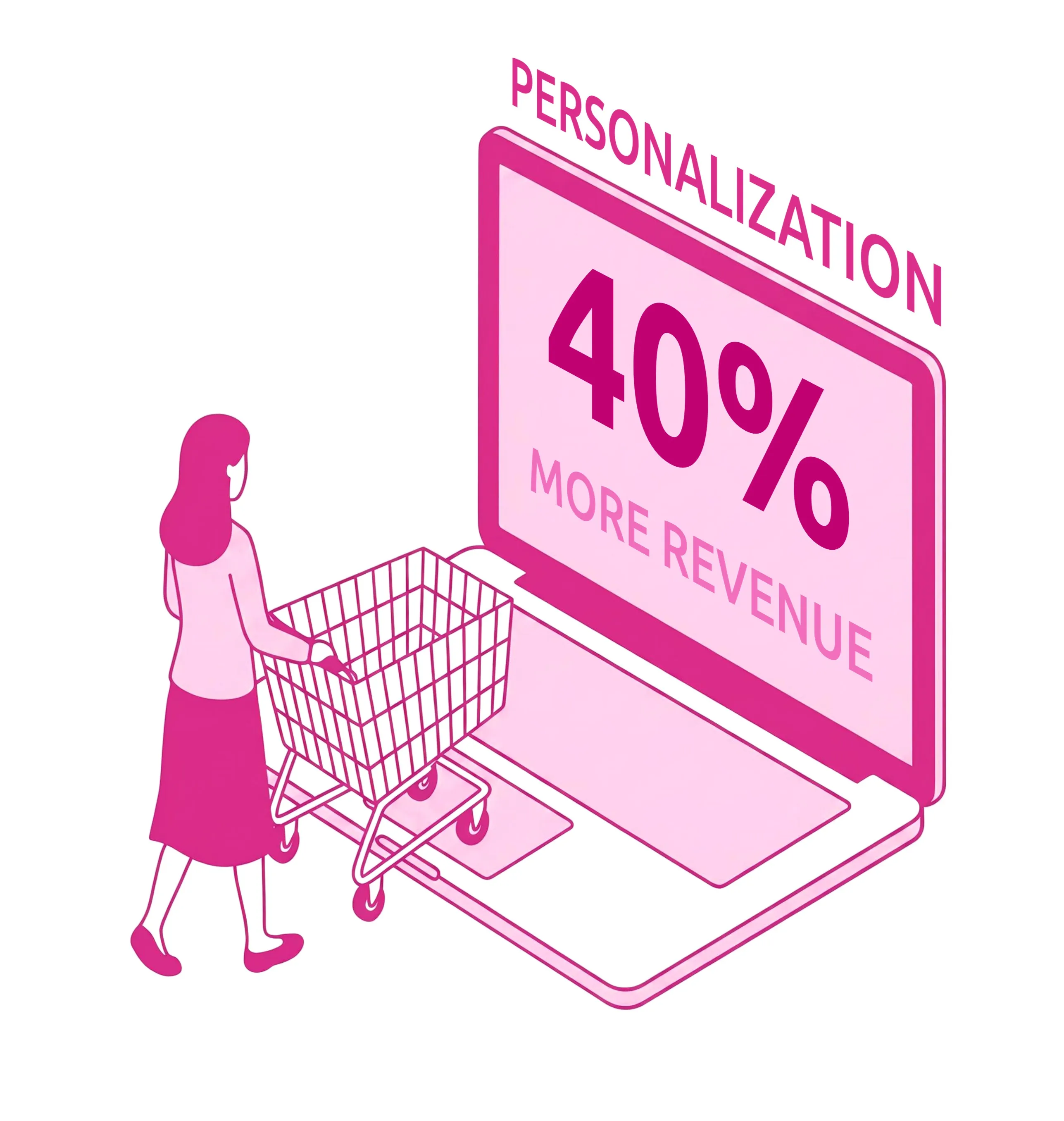 Source: McKinsey, cited in multiple 2025 sources
5. AI adoption is real, but the implementation gap is striking
AI is now a core part of the E-commerce technology stack. The AI-enabled E-commerce market was valued at $8.65 billion in 2025. 91% of retail IT leaders cite AI as their top technology priority for 2026. Yet only 17% of marketing executives currently use AI or machine learning extensively for personalization, even though 84% believe in its potential.
In personalized print specifically, three AI capabilities are reshaping the market at different speeds:
-
Text-to-design generation: Turning a simple prompt into a complete, print-ready layout for marketing collateral. The newest and most disruptive category.
-
AI image tools: Background removal, upscaling, image filters, contours (for stickers or similar). These are further along the adoption curve and directly reducing low-resolution order errors.
-
Automated layout assistance: AI technology suggesting layouts, colour schemes, or design variations. The broadest near-term adoption potential, because it lowers the design skill required from the end customer.
The key distinction for print: in most E-commerce AI use cases, the algorithm operates invisibly. In personalized print, the customer uses AI tools directly, as part of the creative process. The quality bar is higher and the reward for getting it right is a genuinely differentiated product experience.
6. Platform choice shapes everything and mobile is non-negotiable
Shopify holds 30% of the US E-commerce market; WooCommerce powers 18–33% of all E-commerce stores globally. For personalized product businesses, platform choice determines not just storefront capabilities but the depth of integration available with personalization tools, production workflows, and fulfilment partners. It’s never been more important to find solutions that are platform agnostic and allow you the freedom to work with the platforms you feel most at-home with.
More pressing in the near term: 73% of global E-commerce transactions now happen on smartphones. For personalized products, historically a desktop-heavy category due to the complexity of the design experience, this creates an urgent gap for shops that haven’t optimized their personalization interface for mobile. If a customer who arrives on mobile, encounters a sub-optimal editor, and leaves, it’s a conversion lost that analytics may never correctly attribute.
Shops that have implemented web-to-print solutions well have reduced average order processing time by 37%, and 81% report significant operational cost reductions within the first year.
7. Three trends will define the market through 2027
AI moves from feature to infrastructure. The current wave of AI adoption in personalized print is largely feature-level; upscaling here, background removal or fun filters there. The next phase will be infrastructural: AI embedded in the design workflow itself, not bolted on top. Text-to-design generation and automatic product creation (photobooks and mockups for example) is the leading edge of this shift.
Mobile-native replaces mobile-responsive. The gap between desktop and mobile personalization experiences is still significant. The next generation of leading editors are designed for touchscreen first, with desktop as the secondary consideration. With mobile commerce projected to reach $2.12 trillion globally by 2030, the shops that crack genuinely excellent mobile personalization & UX will have a compounding conversion advantage.
Sustainability becomes a commercial differentiator. 60% of online consumers globally now demand environmentally friendly products. Print-on-demand’s zero-inventory model is inherently less wasteful than traditional print-and-hold, but most POD businesses haven’t yet turned this into a credible marketing message. That’s changing.
Want the numbers behind your business specifically?
The full Printess State of Personalized Print report goes much deeper, with benchmark data on conversion rates, AOV uplift, AI adoption, and platform performance specific to personalized print businesses. We’re also gathering primary data from print shops and E-commerce teams right now. If you run a personalized product business, your input will directly shape the findings, and you’ll receive the full report free when it publishes.
The full report includes:
-
Conversion rate and AOV benchmark data from personalized print shops
-
AI tool adoption rates and the features actually moving the needle
-
Platform-by-platform performance data for Shopify, WooCommerce, and others
-
The ranked list of barriers holding print shops back, and how to address them
-
Detailed forecasts and trend analysis through 2027
Get early access and contribute your data